A Trail Built by Community, Preserved for the Future
The Superstition Mountains have long captured the imagination of Arizonans. From legends of hidden treasure to the rugged beauty of the Sonoran Desert, the area has drawn explorers, hikers, and outdoor enthusiasts for generations. One of the most beloved ways to experience this landscape today is the Lost Goldmine Trail—a path that exists because of years of planning, partnerships, and community dedication.
A Trail Born from a Need for Access
In the early 1990s, rapid development around the base of the Superstition Mountains began limiting access to traditional routes used by hikers, horseback riders, and mountain bikers. As subdivisions expanded, many of the old informal trails were cut off, creating challenges for both recreation and nearby residents.
Recognizing the need for a permanent solution, Pinal County approached the Superstition Area Land Trust (SALT) in 1993 to help pursue funding and support for a new trail system. This effort required collaboration across multiple partners—including county, state, and federal agencies—along with local nonprofits and community groups.
What followed was nearly a decade of planning, fundraising, and trail construction.
A Community Effort
Creating the Lost Goldmine Trail was truly a community-driven effort. Volunteers from organizations such as SALT, the Superstition Horsemen’s Association, ADOBE, and local homeowner groups all played key roles in making the project possible.
Funding was also essential. Approximately $350,000 was needed to permanently lease the trail right-of-way from the Arizona State Land Department, while additional grants from Arizona State Parks helped build trailheads, signage, and parking areas.
The combined effort of volunteers, agencies, and community partners ensured that access to the Superstitions would remain open for generations to come.
Opening the Trail
After ten years of work, the Lost Goldmine Trail officially opened in 2002.
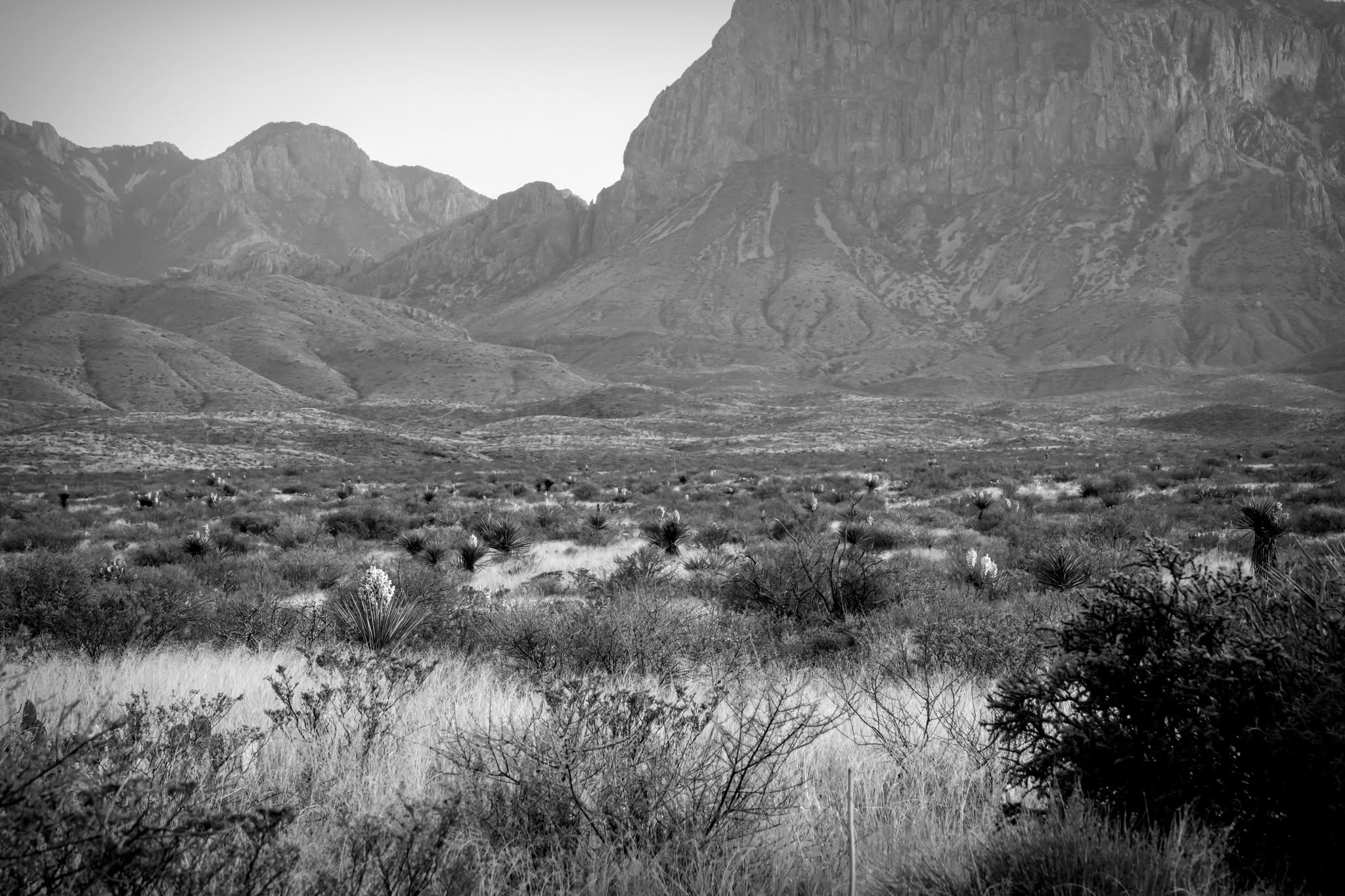
The completed trail stretches about eleven miles along the southern face of the Superstition Mountains, connecting Lost Dutchman State Park near Apache Junction to the Peralta Trailhead to the east.
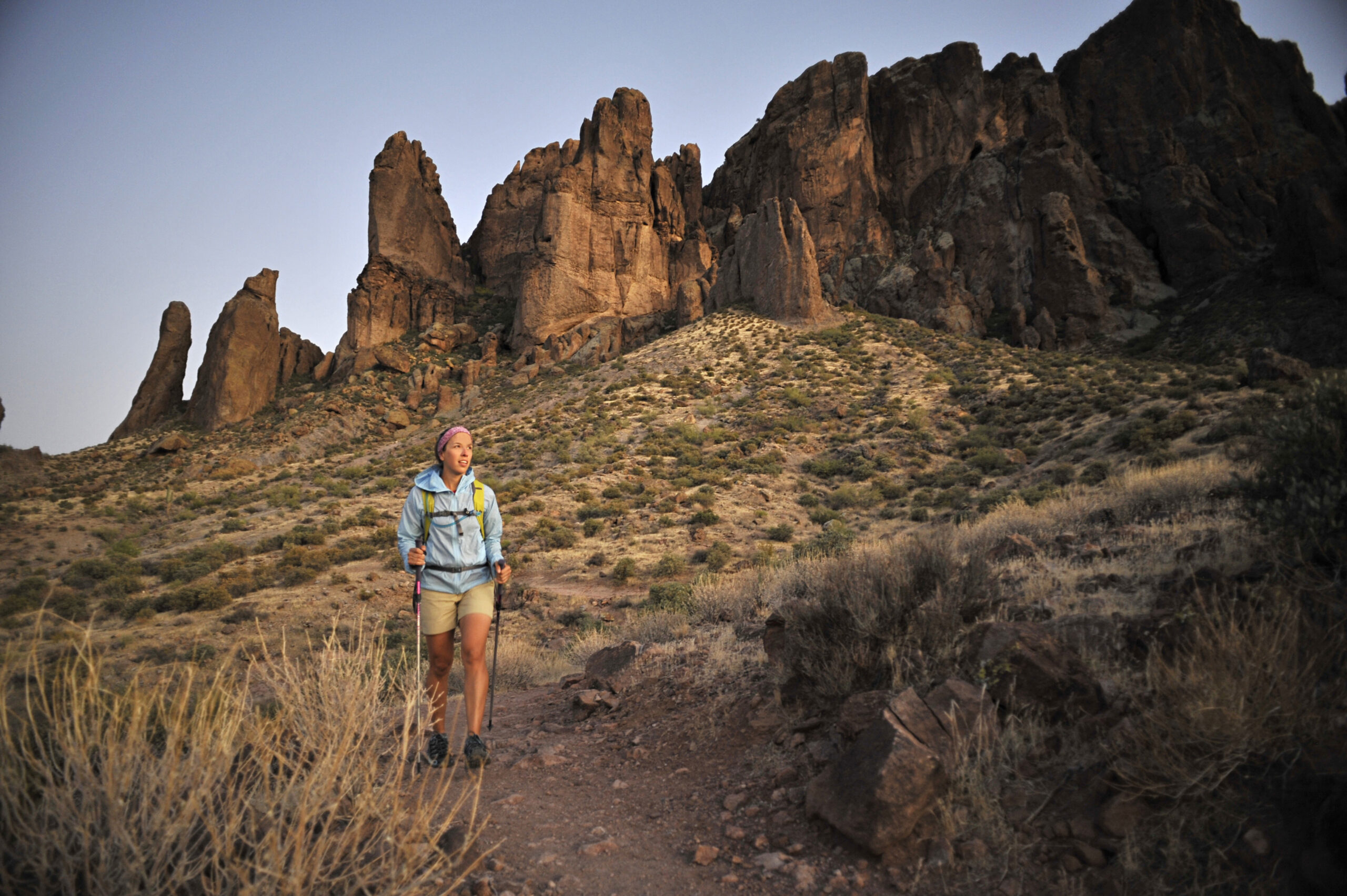
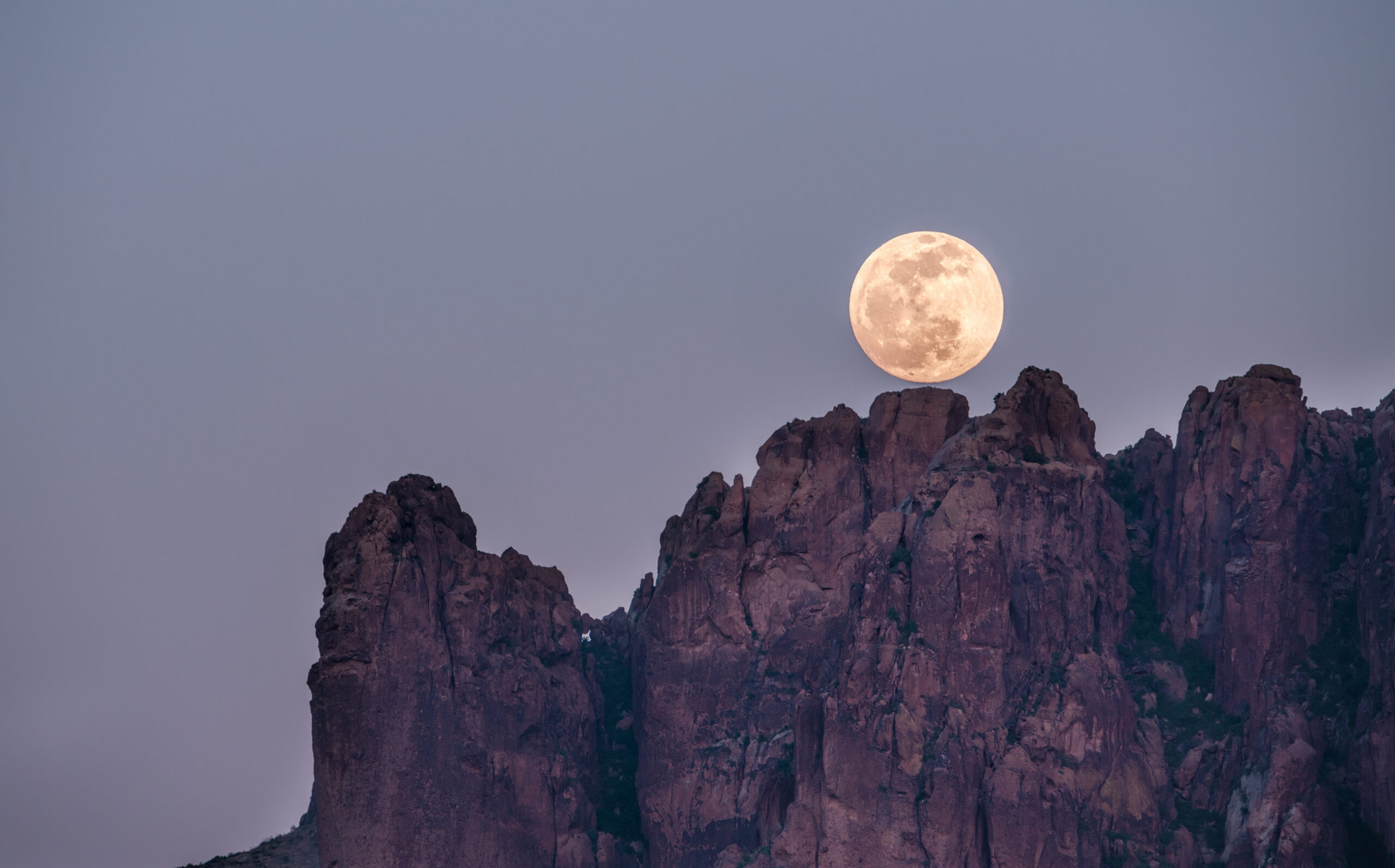
Running along the base of the mountains just outside the Superstition Wilderness boundary, the trail offers sweeping desert views and access to one of Arizona’s most iconic landscapes. Today it’s enjoyed by hikers, mountain bikers, and horseback riders alike.
More Than Just a Trail
While the Lost Goldmine Trail offers incredible recreation, it also reflects something deeper: the power of stewardship.
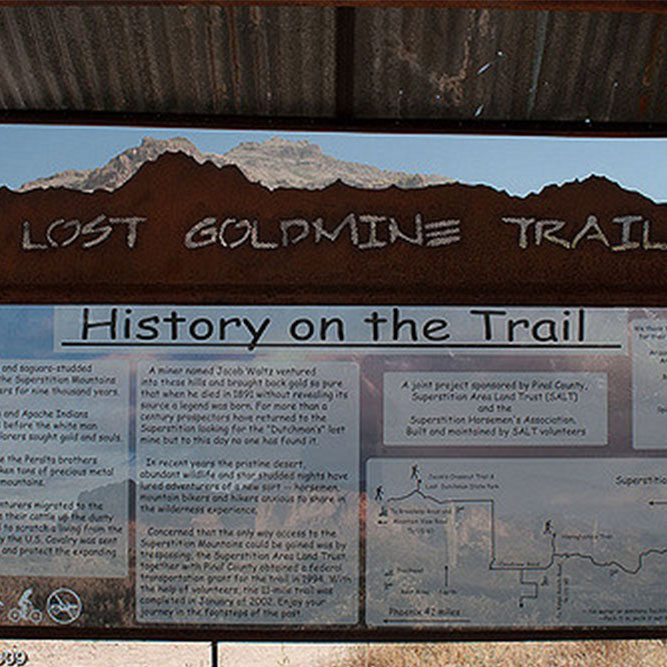
SALT continues to play a role in maintaining the trail through volunteer trail builders and ongoing partnerships. Interpretive signage and trailhead kiosks help educate visitors about the unique plants, wildlife, and history of the area.
Without these ongoing efforts, access to the Superstition foothills might look very different today. Instead, the trail stands as proof that conservation, recreation, and community collaboration can work hand in hand.
A Legacy in the Desert
Today, thousands of outdoor enthusiasts explore the Lost Goldmine Trail every year. Some come for the sweeping desert scenery. Others are drawn by the legends of the Superstitions and the mystery of the region’s lost mines.
But behind every step along the trail is a story of people who believed the land was worth protecting—and who worked together to make sure others could experience it too.
The Lost Goldmine Trail isn’t just a path through the desert.
It’s a legacy of community, stewardship, and connection to the land.