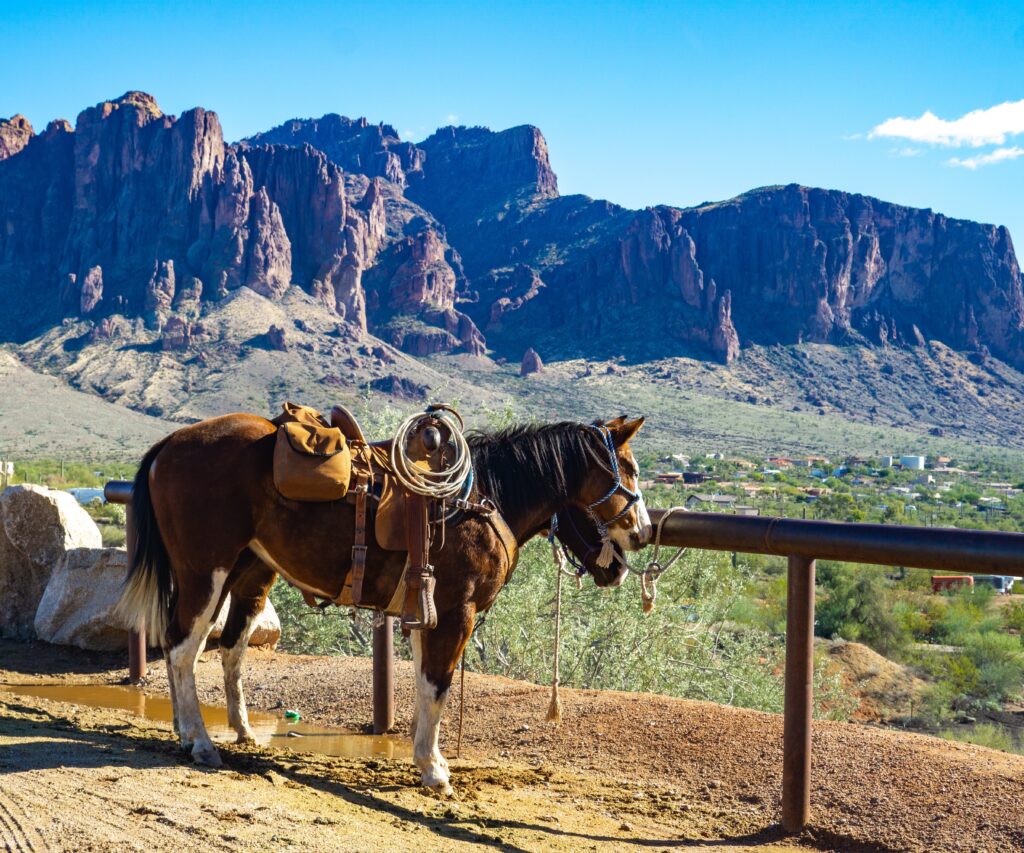
Rising sharply from the Sonoran Desert east of Phoenix, the Superstition Mountains have long captured the imagination of those who live in and pass through Arizona. Rugged, mysterious, and often unforgiving, this landscape holds a deep and layered history—one shaped by Indigenous cultures, early explorers, prospectors, and the enduring myths of the American West.
Ancient Roots: The First Stewards
Long before the Superstitions earned their name, Indigenous peoples thrived in and around these mountains. The Hohokam, known for their advanced irrigation systems, lived in the surrounding valleys more than 1,000 years ago. Petroglyphs and archaeological sites throughout the region point to a rich cultural presence, with the mountains likely serving as both a resource and a place of spiritual significance.
Later, the Apache people came to inhabit the region, navigating its rugged terrain with deep knowledge and respect. For them, the Superstitions were not mysterious—they were home. Stories passed down through generations reflect a connection to the land that still resonates today.
Spanish Exploration and the Birth of Legend
In the 16th and 17th centuries, Spanish explorers entered the Southwest in search of gold and new territory. It was during this period that the seeds of one of Arizona’s most famous legends were planted: the Lost Dutchman’s Gold Mine.
According to lore, Spanish miners discovered rich veins of gold hidden deep within the Superstitions. After conflict with local Apache groups, the location of the mine was lost—intentionally hidden or abandoned. Centuries later, a German immigrant named Jacob Waltz (often referred to as “the Dutchman”) allegedly rediscovered the mine and took its secret to the grave in the late 1800s.
Despite countless expeditions, the mine has never been definitively found. The legend, however, endures—drawing treasure seekers, adventurers, and storytellers to the mountains for generations.
The Wild West Era
By the 1800s, as American settlers moved westward, the Superstitions became part of the broader frontier experience. Apache conflicts, mining attempts, and harsh desert conditions made the area both alluring and dangerous.
Many who ventured into the mountains in search of gold never returned. Stories of lost prospectors, unexplained disappearances, and eerie encounters contributed to the region’s reputation—and ultimately its name. “Superstition” became a reflection of both fear and fascination.
At the same time, ranching and small-scale mining shaped the surrounding areas, laying early foundations for communities like Apache Junction. The mountains stood as a constant backdrop—wild, untamed, and largely unchanged.
From Frontier to Preservation
As Arizona grew and modern development expanded across the Valley, the Superstition Mountains remained a rare and striking example of intact desert wilderness. Recognizing their ecological and cultural importance, efforts were made to protect the area.
In 1939, much of the region was designated as the Superstition Wilderness—the first wilderness area in Arizona and one of the earliest in the United States. This designation helped preserve not only the dramatic landscape, but also the history and stories embedded within it.
Why This History Matters Today
The Superstition Mountains are more than a scenic backdrop—they are a living record of the people, cultures, and events that shaped the American Southwest. From ancient Indigenous stewardship to enduring Western legends, this landscape tells a story that continues to unfold.
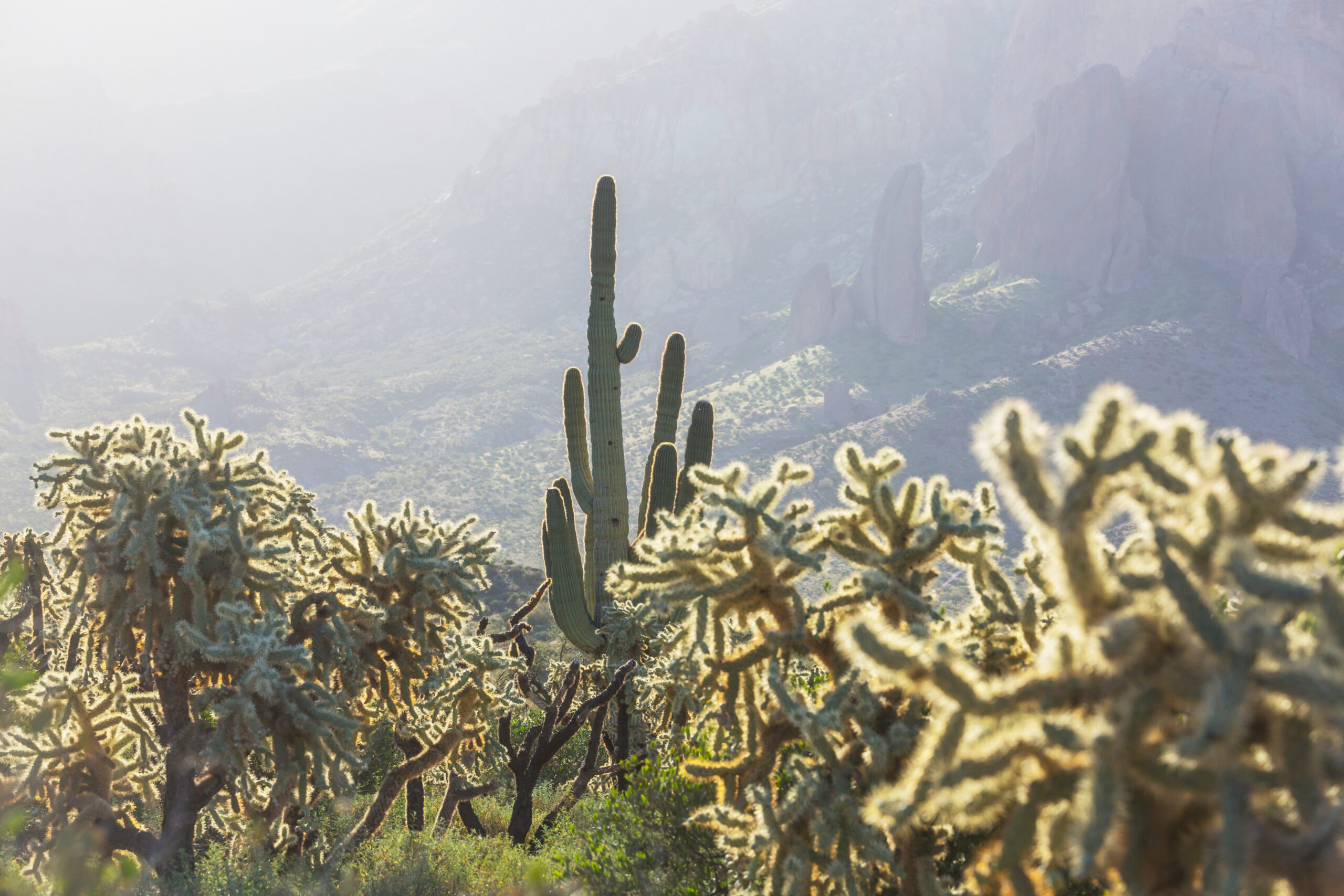
For organizations like the Superstition Area Land Trust, preserving this land means protecting both its natural beauty and its historical legacy. Every trail, canyon, and saguaro stands as a connection to the past—and a responsibility for the future.
Carrying the Story Forward
Today, visitors come to the Superstitions for hiking, photography, and a glimpse into Arizona’s wild heritage. But with that access comes responsibility. Conservation ensures that the same rugged beauty, cultural significance, and sense of mystery remain for generations to come.
The Superstition Mountains have always inspired awe—and they still do. By protecting this landscape, we honor not only its history, but also the stories still waiting to be told.