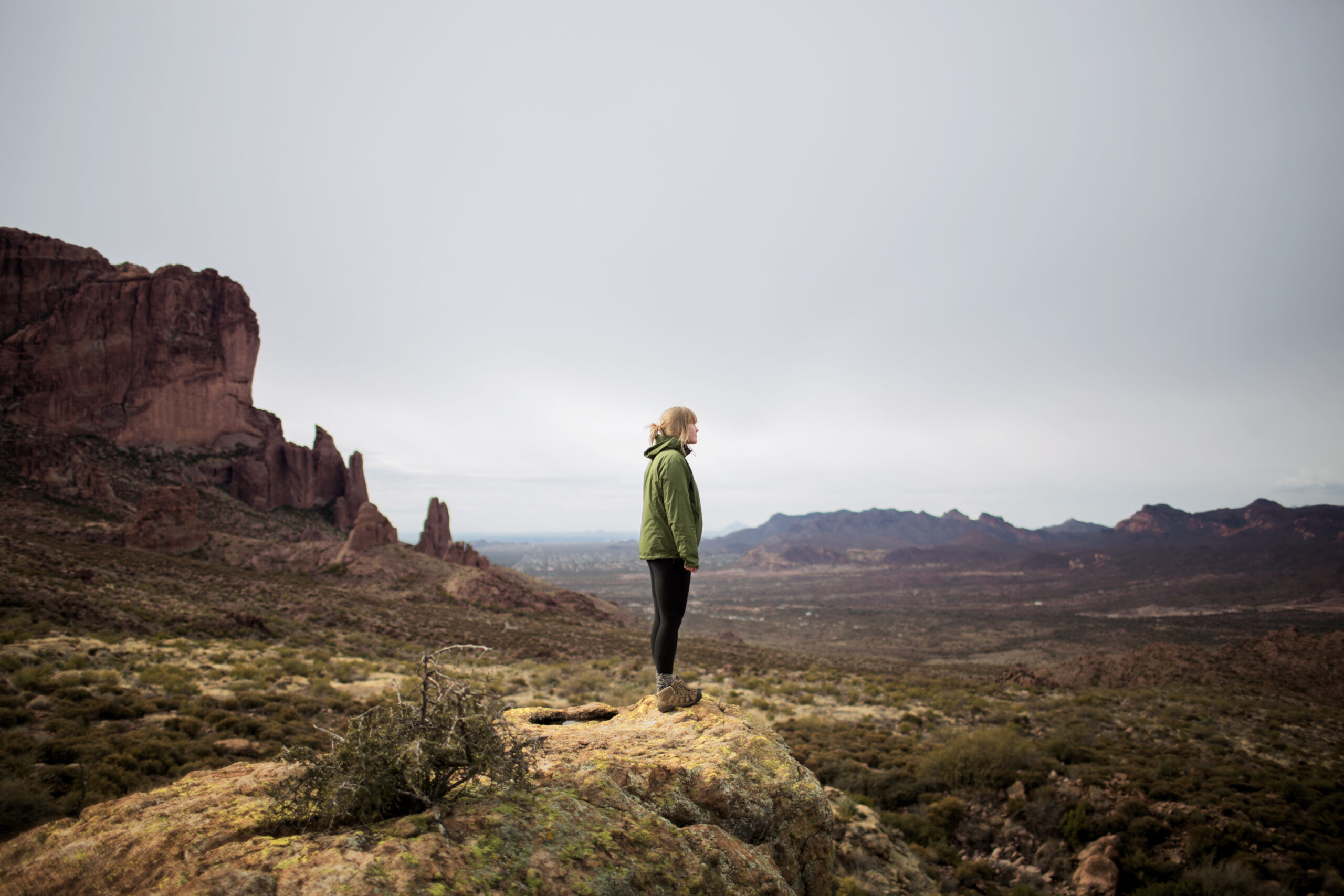
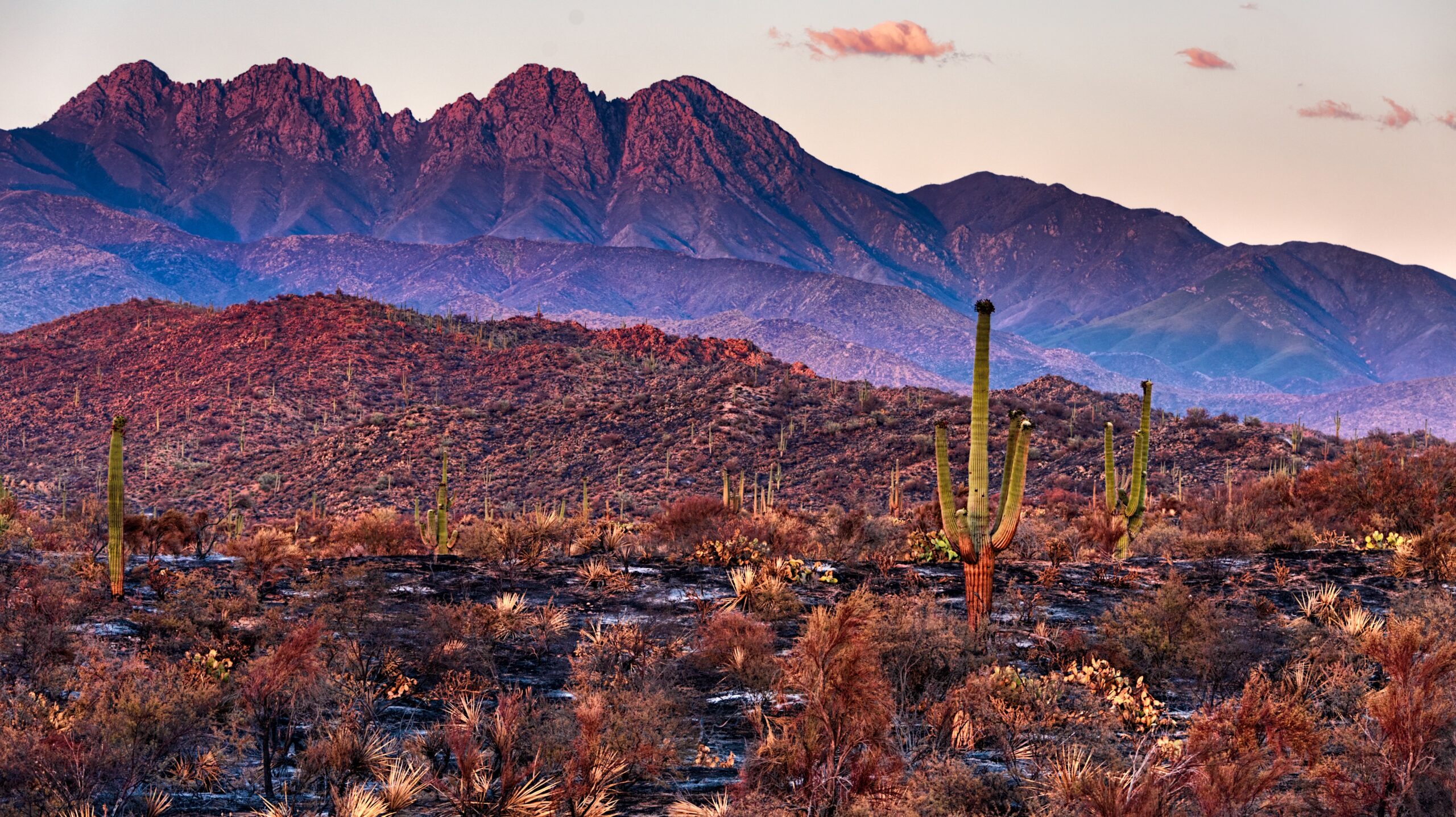
You can recognize the Superstition Mountains from miles away. You probably have a favorite angle for a photo, too.
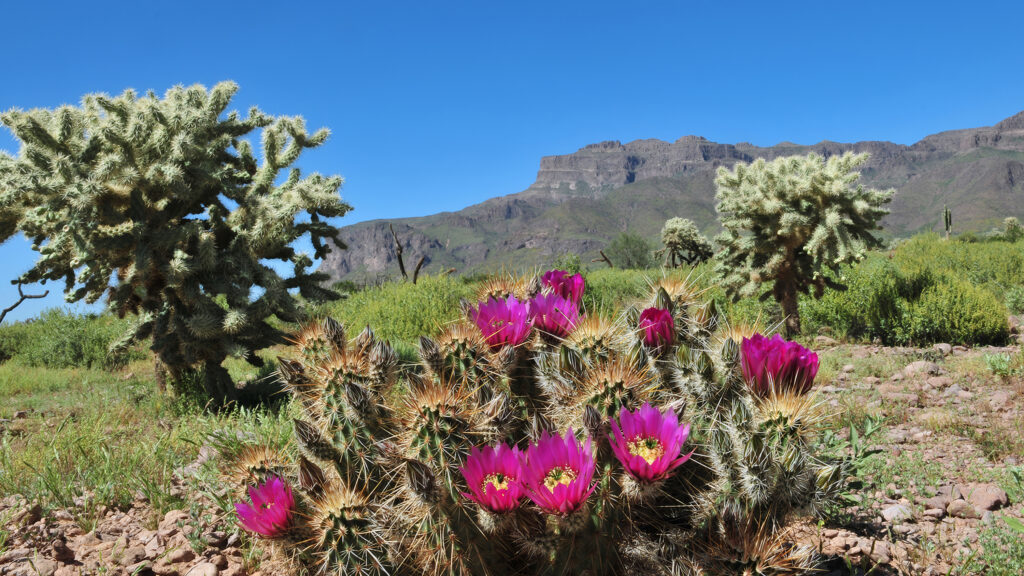
But here’s a different challenge: could you name five native plants growing in the foothills?
The saguaro counts. After that, it might take a little more thought.
This fall, give yourself a reason to look closer. Learning the plants around you can change a familiar desert walk—and SALT’s work at the Silly Mountain Botanical Walk offers a place to begin.
Let Something Smaller Get Your Attention
It’s easy to spend an entire outing looking toward the peaks. Meanwhile, the plants beside the path become a background of green, brown, and occasional thorns.
Try choosing one plant to notice on your next walk.
Look at its shape. Does it branch close to the ground? Are its leaves tiny or broad? What makes it different from the plant beside it?
You don’t have to identify everything immediately. Start with a question you’d like to answer.
Once you learn a plant’s name, see how often you recognize it again. A stretch of desert you thought you knew may suddenly have a lot more going on.
A Local Walk Built Around Learning
The Silly Mountain Botanical Walk grew from a collaboration between the Superstition Area Land Trust and the Apache Junction Parks and Recreation Department.
Designed as a gradual, one-third-mile figure-eight path with compacted crushed granite, the walk brings native Sonoran Desert plants into focus. SALT’s project history records more than 280 indigenous plants representing 35 species planted along the route, with interpretive signs identifying plants and describing traditional uses. AZ Salt
That gives visitors something different to do besides count steps or check their pace.
Read a sign. Look carefully at the plant it describes. Then see whether you can recognize another example along the path.
Make It a Friendly Challenge
If you’re walking with family or friends, let everyone choose a different plant to learn.
Each person gets to point out one identifying detail and explain what caught their attention. At the end, see who remembers the names.
Kids can join in through observation, even before they can read the signs. Ask them to find different leaf shapes, notice patterns, or describe a plant without touching it.
Keep the discoveries where they belong. Take photographs, leave plants undisturbed, and treat information about edible or medicinal uses as education rather than an invitation to sample anything.
The goal is to leave knowing a little more than you did when you arrived.
There Are People Behind That Path
A botanical walk takes more than putting labels beside plants.
SALT’s account of the project describes community input, landscape planning, pathway construction, irrigation work, and contributions from local organizations. SALT’s Trail Builders Crew helped construct the pathway, and a grant from the Nina Mason Pulliam Charitable Trust supported the project. AZ Salt
Those details are worth remembering while you walk.
Someone helped make it possible for the next visitor to stop, learn a name, and see the desert with a little more understanding.
Get to Know What You Want to Protect
SALT’s mission is to conserve the natural Sonoran Desert and open spaces surrounding the Superstition Wilderness Area for this and future generations. Education is part of that work. Serving the Superstitions
Learning a few plants is a small place to start, but it gives your connection to the foothills something specific to grow around.
Next time you look toward the Superstitions, take the mountain photo. Then look down the path and see what else you recognize.
Learn about the Silly Mountain Botanical Walk and discover how SALT helps people connect with the desert they love.